| |
| Wednesday 4 November 2026 |
| Women Artists in Britain 1620 - 1920 |
| Dr Amy Lim |
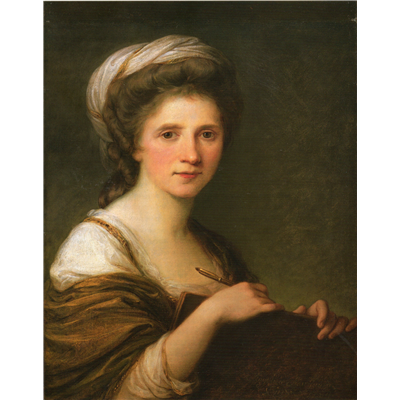 |
Venue: Banstead Community Hall, Park Road, Banstead, SM7 3AJ Lecture starts at 10.30 a.m. Women have worked as artists for hundreds of years, often struggling against societal expectations and institutional barriers. From the Stuart courts to the First World War, this lecture follows women artists in Britain on their journeys to becoming professionals. Determined to succeed and refusing to be boxed in, they daringly painted what were usually thought to be subjects for male artists: history pieces, battle scenes and the nude. These artists championed equal access to art training and academy membership, breaking boundaries and overcoming many obstacles to establish what it meant to be a woman in the art world. Besides well-known artists such as Angelica Kauffman and Rosa Bonheur, we will meet lesser-known artists who were highly successful in their day, but have since been forgotten.
Dr Amy Lim is an art historian and curator, specialising in British fine and decorative arts from the seventeenth to twentieth centuries. She is curator of the Faringdon Collection at Buscot Park, Oxfordshire, and the Stanley Spencer Gallery, Cookham, and a Departmental Tutor at Oxford Lifelong Learning. She has curated and contributed to numerous exhibitions, including British Baroque: Power and Illusion (Tate, 2020), Now You See Us: Women Artists in Britain, 1520-1920 (Tate, 2024) and Love & Landscape: Stanley Spencer in Suffolk (Gainsborough’s House, Sudbury and the Stanley Spencer Gallery, 2025-6). Amy has degrees in History, and Literature & Arts from the Universities of Oxford and Cambridge, and has published articles and essays on a variety of art-related topics from gothic garden monuments to female patronage. |
|
| Wednesday 2 December 2026 |
| Christmas and Other Festivals in Modern Mexico |
| Chloe Sayer |
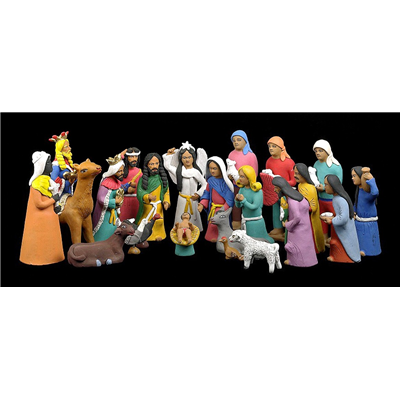 |
Venue: Banstead Community Hall, Park Road, Banstead, SM7 3AJ Lecture starts at 10.30 a.m. Mexico has a vast range of festivals. Visually splendid, many feature lavish processions and masked dances with richly decorated costumes. Although some festivals commemorate national events, most are religious in inspiration. After the Spanish conquest of 1521, priests used theatrical representation as a method of instruction. Traditionally, people display elaborate nativity scenes in their homes. The Christmas story is acted out in towns and villages: adults and children perform as shepherds and shepherdesses, hermits and devils. Other important celebrations include Saints' Days, All Souls' Day, and Carnival. Chloë Sayer's book 'Fiesta' was published in 2009 by The British Museum Press.
Freelance specialist in the art and culture of Latin America. Has lectured in the UK, Canada, Ireland, Mexico, Australia and New Zealand. Has curated exhibitions, and assisted on TV documentaries for BBC and Channel 4. Has made collections in Mexico and Belize for the British Museum, and is Research Associate in the Department of World Cultures at the Royal Ontario Museum. In 2016 she was awarded the prestigious Ohtli medal by the Mexican government for her long-standing commitment to Mexican culture. Her many publications include Mexican Textiles (British Museum Press, 1990), Arts and Crafts of Mexico (Thames & Hudson, 1990), Focus on Aztecs and Incas (Watts Books, 1995), The Incas - The Ancient World (Wayland, 1998), Textiles from Mexico (British Museum Press, 2002), and Mexico: Clothing and Culture (Royal Ontario Museum, 2015). Has also published articles in travel guides, newspapers and magazines. |
|
| Wednesday 6 January 2027 |
| Noel Coward: The Man behind the Mask |
| Simon Whitehouse |
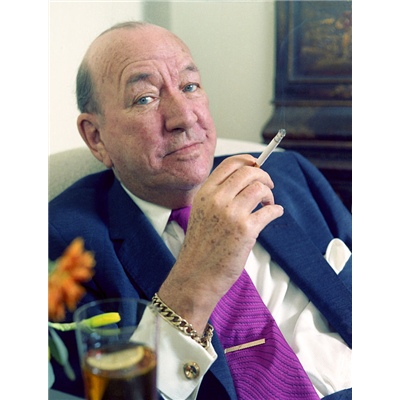 |
Venue: Banstead Community Hall, Park Road, Banstead, SM7 3AJ Lecture starts at 10.30 a.m. "I don’t know what it is, but I’ve got it!" ‘It’ was ”star quality”, and the person that had ‘it’ was Noel Coward! On the surface, Coward appeared to be just a camp man swanning about in a dressing gown, dropping acerbic one liners like cigarette ash from a long cigarette holder. But Noel Coward was one of the most versatile cultural figures of the 20th century and his career is the history of 20th century British theatre. As Lord Mountbatten put it, there may be greater painters, greater comedians, greater novelists, only “the Master” had combined fourteen talents rolled into one In any given week, his plays such as "Private Lives" & "Hay Fever" are being performed somewhere in the world, and we can all quote "Mads Dogs and Englishmen" and "Mad About The Boy", but still the range of his work is underestimated. TS Eliot said that there are things that you can learn from Noel Coward that you won’t learn from Shakespeare. Like Shakespeare, some of Coward’s most moving lines are in his poems which I’ll be sharing in the lecture. Coward said, “I’ll go and see anything so long as it amuses me, or moves me. If it doesn't do either I want to go home.” So I invite you to join me for this lecture, in the company of Coward, to be amused and moved…!
Simon Whitehouse is a (recovering) actor, lecturer, presenter, Alexander Technique and voice teacher and award winning London Blue Badge guide. He has worked as a guide lecturer in house at Shakespeare’s Globe, the Royal Opera House, the BBC and the National Gallery guiding both public and private tours. He is on the faculty of Ithaca College and also lectures for the Blue Badge Guide training course on the performing arts and English literature. Simon’s specialisms and passions are theatre, literature, fashion and art history but whatever the subject, Simon will weave a wonderful story from it. Photo: Allan Warren |
|
| Wednesday 3 February 2027 |
| Cartoons and Contraptions: The Wonderful World of W. Heath Robinson |
| Barry Venning |
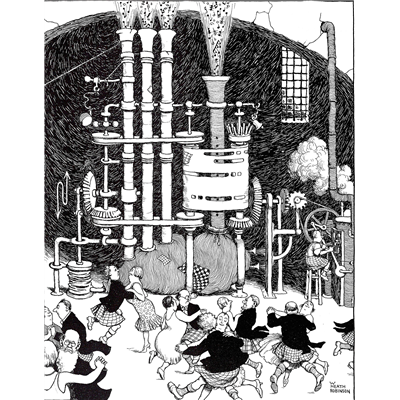 |
Venue: Banstead Community Hall, Park Road, Banstead, SM7 3AJ Lecture starts at 10.30 a.m. For over a century, W. Heath Robinson, whom the novelist, Philip Pullman called ‘the immortal contraptioneer’, has been famous for drawing rickety, bizarrely complicated devices that carry out the simplest of tasks like potato peeling, wart removal or pancake making. He became so famous for them that in 1933, he was the obvious person to illustrate Norman Hunter’s Professor Branestawm books and, in 1943, Bletchley Park named one of their code-breaking machines after him. Much later still, some of the contraptions in Wallace and Gromit’s The Wrong Trousers are based on a scale model of a gadget filled house that he made for the Ideal Home Show in 1934. But there was more to him than this: he was also a fine painter, an outstanding literary illustrator and a brilliant satirist, who poked gentle fun at modern life in cartoons that are still laugh out loud funny.
Barry Venning is an art historian whose interests and teaching range from the art of late medieval Europe to global contemporary art. He has published books, articles and exhibition catalogue essays on Turner, Constable and European landscape painting, but also has an ongoing research interest in postcolonial art and British visual satire. He works as a consultant and associate lecturer for the Open University. His media work includes two BBC TV documentaries, radio appearances for BBC local radio and abc Australia, and a DVD on Turner for the Tate. |
|
| Wednesday 3 March 2027 |
| Highlights of the Vatican Museum and the Sistine Chapel |
| Stuart Harvey |
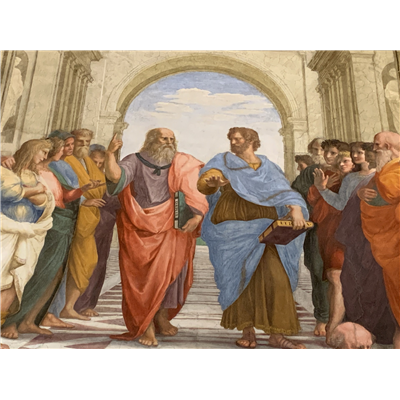 |
Venue: Banstead Community Hall, Park Road, Banstead, SM7 3AJ Lecture starts at 10.30 a.m. An unforgettable journey to explore the highlights of the vast Vatican Museums collection, with a deep focus on the spectacular frescoes by Michelangelo Buonarroti and others in the Sistine Chapel. Professional Rome tourist guide Stuart Harvey takes you on a virtual stroll through the corridors and rooms to see ancient classical statues that influenced renaissance and later artists, and also intricate roman mosaics, magnificent tapestries, and the beautiful frescoes by Raphael that decorate the private rooms of the 16th century Popes. We will end our journey in the Sistine Chapel, where Popes are elected in secret at Conclave.
Stuart Harvey is a “History and Art Communicator” of 30 years experience. He is a London Blue Badge Tourist Guide (qualified in 1998 - awarded “New Guide of the Year”) and also a Guida Turistica Abilitata della Provincia di Roma (qualified in 2010). He has worked in educational tourism since 1992, leading study tours all over Europe. Living in Rome since 2003, Stuart has developed a great love for the Eternal City and its many treasures. In addition to his primary career as full-time Rome tourist guide, Stuart’s entertaining and lively lectures and virtual tours bring the rich artistic and historical wealth of Rome’s 28 centuries to life for people all over the world. Available at short notice - for virtual lectures. Limited dates for live lectures. I live in Rome so for most of the year would be available only for virtual lectures on zoom. However I shall be in the UK for live lectures between mid-February and mid-March and again between mid-November and mid-December each year. |
|
| Wednesday 7 April 2027 |
| Anna Karenina, Tolstoy and Russia |
| Rosamund Bartlett |
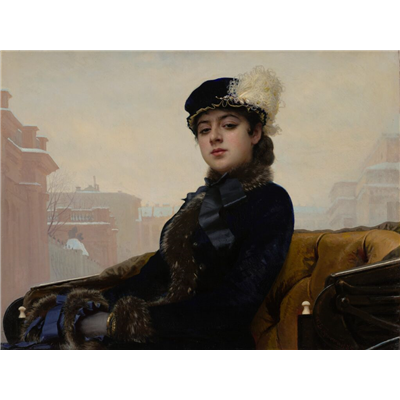 |
Venue: Banstead Community Hall, Park Road, Banstead, SM7 3AJ Lecture starts at 10.30 a.m. One of the greatest novels ever written, in any language, Anna Karenina explores profound questions of life, death, love and marriage which far transcend their setting in 1870s imperial Russia, and continue to have relevance for us today. With ample illustrations drawn from works of 19th-century Russian art which have a direct bearing on the issues Tolstoy raises, this lecture will show how how the novel's exhilarating and intricate narrative reflects events in the author’s own turbulent life and anticipates both the upheaval of Revolution and the great debates of our time.
Rosamund Bartlett is a writer, lecturer and translator whose work ranges across the arts, and across the cultures of Europe, from Italy to Norway. She began her career as an academic in Slavic studies after completing her doctorate at Oxford, and has held fellowships both in the UK and at the European University Institute in Florence. In 2024 she became a Royal Literary Fund Fellow at Brasenose College, Oxford. The author of several books, including biographies of Chekhov and Tolstoy, and a study of Wagner's influence in Russia, she is also well known as a translator - her publications include acclaimed editions of Anna Karenina and Chekhov's stories for Oxford World’s Classics. She has written on music and literature for institutions including the Royal Opera House, the National Theatre and the Salzburg Festival, and about art for Apollo and The Burlington Magazine. She is currently writing a book about the revolution in the arts which took place in early 20th-century Moscow, St. Petersburg, Kyiv and Odesa, and its connection to modernist developments in Paris, Munich and Milan. She has led art, architecture, design and music tours throughout Europe, and contributes regularly to Proms events and opera broadcasts on the BBC. Her lecturing work has taken her from the Ashmolean Museum in Oxford where she lives, to the V&A in London, and to the Art Gallery of New South Wales in Sydney. |
|
| Wednesday 5 May 2027 |
| The Fabulous World of London's Lost Department Stores |
| Tessa Boase |
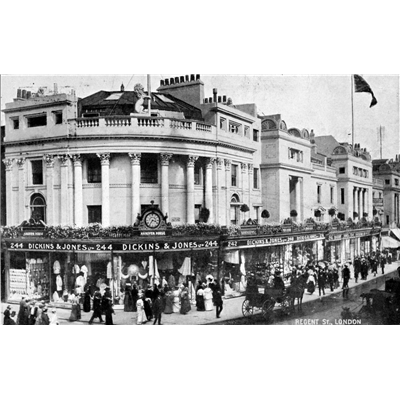 |
Venue: Banstead Community Hall, Park Road, Banstead, SM7 3AJ Lecture starts at 10.30 a.m. London’s sumptuous Victorian and Edwardian department stores changed the capital – and changed its women. Shoppers of every rank were lavishly wooed, seduced and often undone by the temptations laid out before them in these new ‘cathedrals of desire’. Starting on Oxford Street’s ‘golden mile’, we’ll set off on a cultural tour of the capital’s big stores – from snooty Marshall & Snelgrove, to Pontings ‘House of Value’; from Gamages' legendary toy department, to the live flamingos atop Derry & Toms; from Bodgers of Ilford, to Bon Marché of Brixton. How did it feel to enter a great store in the lavish Edwardian era? What was it like to serve? From shoppers to shop girls, publicity stunts to wow factor window dressing, this is a fascinating slice of social history, with wonderful period images. This lecture will be personalised to each arts society with some local department store history. Nostalgic, escapist and very bonding for Arts Society audiences. The memories will start flowing.
Tessa Boase is a freelance journalist, author, lecturer and campaigner with a particular interest in uncovering the stories of invisible women from the 19th and early 20th-centuries – revealing how they drove industry, propped up society and influenced politics. She’s the author of three books of social history: The Housekeeper’s Tale: The Women Who Really Ran the English Country House; Etta Lemon: The Woman Who Saved the Birds, and London’s Lost Department Stores: A Vanished World of Dazzle and Dreams. Since uncovering the feminist origins of the RSPB, Tessa has been campaigning for public recognition of its female founders with plaques, portraits and a statue. |
|
| Friday 14 May 2027 |
| Food and Art through the Ages: Banstead Festival Arts lecture |
| Natasha Marks |
 |
Venue: Banstead Community Hall, Park Road, Banstead, SM7 3AJ Lecture starts at 7.30 p.m. Admission: £10 Food and Art Through the Ages is a whistle-stop tour of the history of food as artistic medium; starting with 16th century sugar sculpture and venturing all the way up to 3D dessert printing and beyond. Hosted by Food Historian Tasha Marks, this lecture is a treat for those with a sweet tooth, as Marks feels the subject of food and art through the ages is most exciting in the realms of the dessert. Topics covered include; the origins of dessert, the crossover between sugar and art, architecture and dessert (including Renaissance banqueting houses), sugar and spectacle, food as artistic medium, and the future of food.
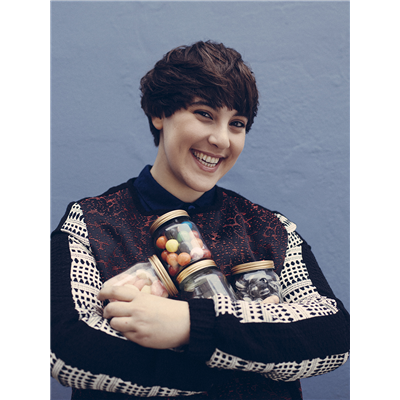
Tasha Marks is an award-winning food historian and artist, who explores the relationship between food, art and history. Her practice, AVM Curiosities, champions the use of food as an artistic medium, with projects ranging from museum-style exhibitions and sculptural installations, to interactive lectures and limited-edition confectionery. Recent academic achievements include publication in the Oxford Companion to Sugar and Sweets, where Tasha authored the entry on Mrs Beeton, one of the Victorian era’s most influential cooks. Photo: Ash Kingston |
|
| Wednesday 2 June 2027 |
| Sir Henry Wood: Founder of the Proms and Master Musician |
| Raymond Holden |
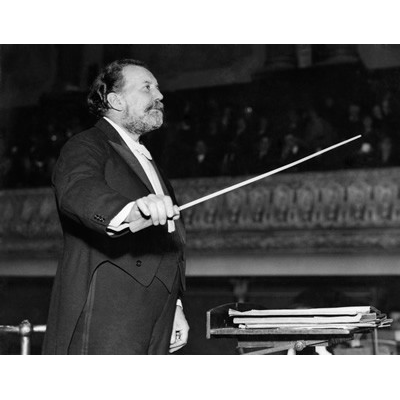 |
Venue: Banstead Community Hall, Park Road, Banstead, SM7 3AJ Lecture starts at 10.30 a.m. Without the tireless efforts of Sir Henry J, Wood, British musical life would be very different indeed. Organist, vocal pedagogue, recording artist and conductor were all disciplines that defined this great and indefatigable artist. Aware of the inegalitarian nature of concert life during the late nineteenth century, he set about making music available to the man in the street by founding the Promenade Concerts at Queen's Hall in 1895 with the impresario Robert Newman. Wood was also quick to recognise the potential of the gramophone, as both a means of mass musical dissemination and as a teaching aid. So, it was not uncommon to hear early-twentieth-century British concert-goers say that they 'learned their music from Sir Henry Wood'. Dubbed 'TImber' by his colleagues, Wood was also a great champion of musicians' rights and regularly gave the first British performances of works by Mahler, Strauss, Schoenberg, Debussy, Ravel and Rachmaninov amongst others. Using rare film clips, recorded sound examples and other performance artefacts, this lecture will examine the life and times of Sir Henry J. Wood and the impact that he continues to have on today's musical life.
Born in Australia, Professor Raymond Holden AM studied at Sydney, Cologne and London and is both a critically acclaimed and a multi-award winning writer, conductor, broadcaster and lecturer. He has performed with the Philharmonia Orchestra, the Danish Radio Symphony Orchestra, the BBC Symphony Orchestra, the Orchestra of the Emilia Romagna and the New Symphony Orchestra of London, and has been published regularly by Oxford, Cambridge and Yale University Presses, the Royal Academy of Music Press, Hans Schneider Verlag (Vienna) and by ICA, EMI and Warner Classics. Professor Holden has appeared on BBC Television and Radio, Servus TV (Germany), RAI Television and Radio, ABC Classic FM, 3MBS FM, Vision Australia Radio, SRF (Switzerland) and Classic FM (South Africa), and has spoken at many of the world’s leading music and literary festivals, universities, conservatoires and research institutes. He was appointed a Member of the Order of Australia (AM) in the 2019 Queen’s Birthday Honours List and is currently Emeritus Professor of Music at the Royal Academy of Music, London. |
|